
Custom Software Development Process: A Complete Step-by-Step Guide
In today’s digital-first business environment, organisations require technology solutions that align with their unique goals and workflows. While off-the-shelf software may offer basic functionality, it often falls short when it comes to flexibility, scalability, and business-specific requirements. This is where the custom software development process becomes essential.
A well-planned software solution helps businesses streamline operations, improve productivity, enhance customer experiences, and gain a competitive advantage. Understanding each stage of the development lifecycle can help businesses make informed decisions and achieve better project outcomes.
Custom Software Development Process Explained for Businesses
The Custom Software Development Process is a structured approach used to design, build, test, and maintain software solutions tailored to specific business needs. Unlike off-the-shelf software, custom solutions are developed to address unique operational challenges, improve efficiency, and support long-term growth. Understanding each stage of the development lifecycle helps businesses make informed decisions, reduce project risks, and ensure successful software implementation. In this guide, we’ll explore the complete Custom Software Development Process, from requirement analysis and planning to deployment and ongoing support.
Step 1: Requirement Analysis and Discovery
The first phase of the software development lifecycle focuses on understanding business goals, challenges, and project requirements. This stage is critical because it lays the groundwork for the entire project and ensures that all stakeholders have a clear understanding of the desired outcomes.
During this stage, development teams work closely with stakeholders to identify:
- Business objectives
- User expectations
- Functional requirements
- Technical specifications
- Project timelines and budgets
Proper requirement analysis creates a strong foundation for the entire project and helps prevent costly revisions later. It also enables businesses to identify potential risks, prioritize features, and align development efforts with long-term business strategies.
Key Deliverables
- Requirement documentation
- Project scope definition
- Business process analysis
- Technical feasibility report
Step 2: Planning and Project Strategy
Once requirements are finalized, the next step is creating a detailed project roadmap. Strategic planning ensures that resources, timelines, and budgets are allocated effectively while minimizing development risks.
This phase includes:
- Resource planning
- Technology selection
- Risk assessment
- Budget estimation
- Timeline creation
An experienced software development service provider ensures that every aspect of the project is carefully planned before development begins. A well-defined strategy helps improve project efficiency, communication, and overall delivery success.
Step 3: UI/UX Design and System Architecture
Design plays a critical role in software success. A user-friendly interface improves engagement while a strong architecture ensures long-term scalability and performance.
UI/UX Design
Designers create:
- Wireframes
- User journeys
- Interactive prototypes
- Visual interface designs
The goal is to create an intuitive and seamless user experience that increases customer satisfaction and adoption rates.
System Architecture
Developers define:
- Database structures
- Application architecture
- Security frameworks
- API integrations
- Cloud infrastructure
This phase is a crucial part of custom software design and development, ensuring the final product is both visually appealing and technically robust.
Step 4: Software Development and Coding
After approval of the designs, developers begin building the application. This is where concepts and plans are transformed into a fully functional software solution.
Front-End Development
Creating user-facing interfaces that provide a seamless experience across devices and screen sizes.
Back-End Development
Building server-side functionality, databases, APIs, and business logic that power the software’s core operations.
Integration Development
Connecting third-party platforms, payment gateways, CRM systems, ERP solutions, and other business tools.
Modern Agile methodologies allow businesses to monitor progress through regular updates, sprint reviews, and continuous feedback cycles, ensuring transparency throughout the development process.
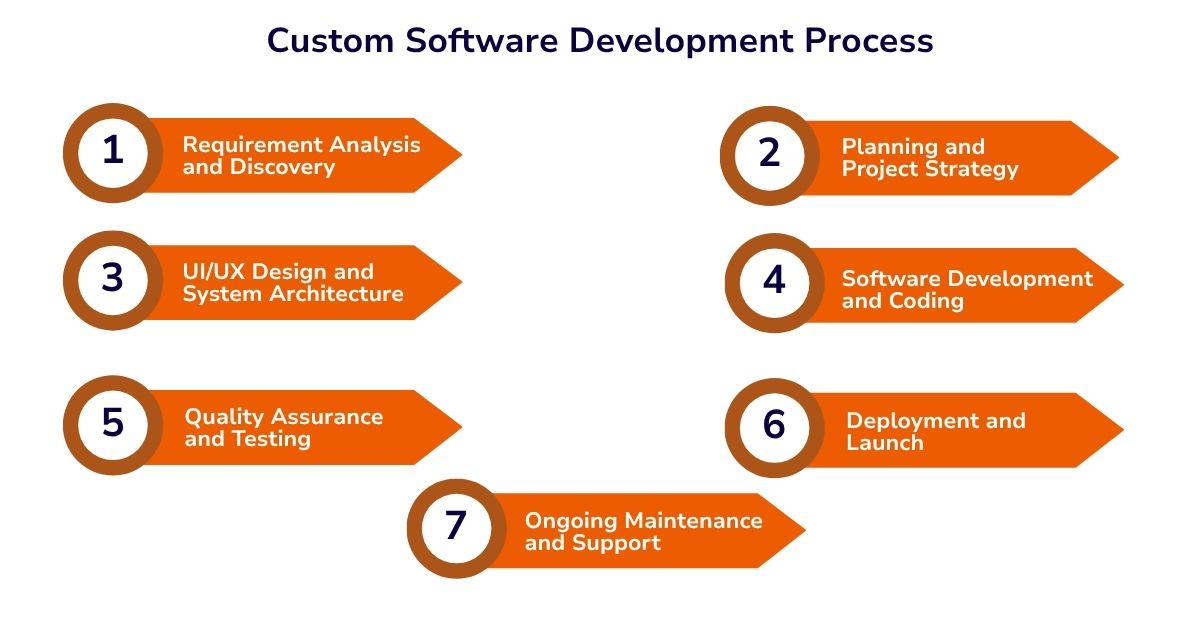
Step 5: Quality Assurance and Testing
Testing ensures the software performs as expected before deployment. A comprehensive testing process helps identify issues early and guarantees a high-quality user experience.
Types of Software Testing
Functional Testing
Validates all features and functionalities.
Performance Testing
Measures speed, responsiveness, and system stability under different workloads.
Security Testing
Identifies vulnerabilities and protects sensitive business and customer data.
Compatibility Testing
Ensures software works across different devices, browsers, and operating systems.
User Acceptance Testing (UAT)
Confirms the software meets business requirements and user expectations.
Comprehensive testing helps deliver a reliable, secure, and high-quality software product.
Step 6: Deployment and Launch
After successful testing, the software is deployed to the production environment. This phase requires careful execution to ensure a smooth transition from development to live operations.
Deployment activities include:
- Server setup
- Database configuration
- Security implementation
- Application deployment
- Performance monitoring
A smooth deployment process minimizes downtime and ensures users can access the software without interruptions. Continuous monitoring during launch helps identify and resolve any unexpected issues quickly.
Step 7: Ongoing Maintenance and Support
Software requires continuous updates to remain secure, efficient, and aligned with changing business needs. Post-launch maintenance is essential for ensuring long-term performance, reliability, and customer satisfaction.
Post-Launch Services Include
- Bug fixing
- Security updates
- Feature enhancements
- Performance optimization
- Technical support
- System monitoring
A reliable software development agency provides ongoing maintenance to maximize software performance and longevity. Regular updates help businesses adapt to market changes, improve user experiences, and maintain a competitive advantage in the digital landscape.
Technologies Used in Modern Software Development
The technology stack depends on project requirements and business goals.
Front-End Technologies
- React.js
- Angular
- Vue.js
- HTML5
- CSS3
Back-End Technologies
- Node.js
- PHP
- Python
- Java
- .NET
Database Solutions
- MySQL
- PostgreSQL
- MongoDB
- SQL Server
Cloud Platforms
- AWS
- Microsoft Azure
- Google Cloud
Selecting the right technologies ensures scalability, performance, and security.
Transform Your Business with Custom Software Development
The custom software development process is a strategic approach that helps businesses build software tailored to their specific needs. From requirement gathering and planning to development, deployment, and maintenance, every stage contributes to creating a successful software solution.
Investing in professional custom software design and development services allows organizations to streamline operations, enhance productivity, and gain a competitive advantage. By partnering with TecOptima Business Solution, businesses can access expert software development service solutions backed by industry experience and technical excellence.